Emerald Isle Day 2 – The Unsuspecting Captives of Castle Kilkenny

Photo by Tim McMurtry

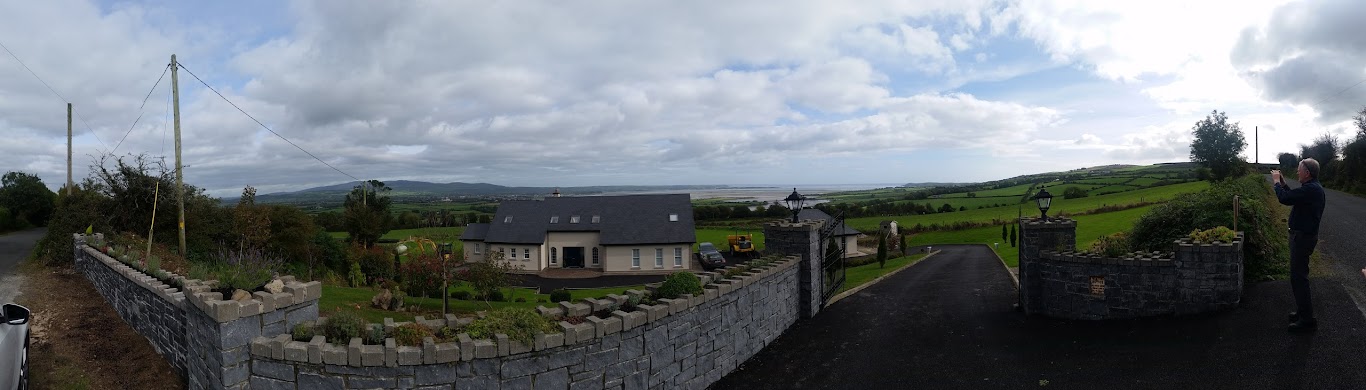
Day 2 found us waking up in the luxuriously appointed home of our Airbnb hosts in the Model Farm neighborhood of Cork, Ireland. The lovely furnishings, beautiful back yard and gritty gravel road were so provincial and inspiring; its no wonder that farmhouse style is a perennial favorite. After a breakfast of musli and showers in a bathroom fancier than most we’ve experienced, we were off to visit Waterford to purchase a gift of crystal for M-I-L Joyce.


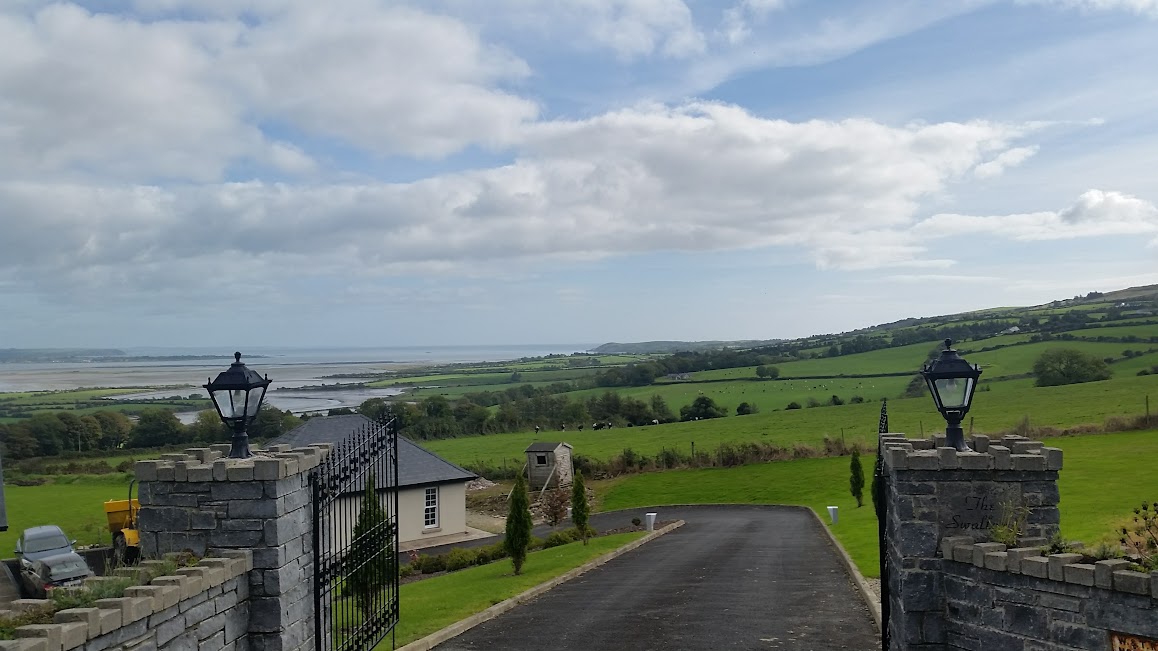
An ocean inlet in Cork Ireland. Within 2 weeks the water would be blowing over the canal into the streets as Hurricane Ophelia hit the coastal village.
Hurricane Ophelia makes landfall in Cork. Photo by videoblogsterpro.com

But first, a stop to shop for an Irish dolly requested by our little red-headed granddaughter Ellyza.

Still struggling to stay safe on the NARROW lanes and (to us) backward roads of Ireland, we found a toy shop, Smyth’s, in Cork. You could have pinched me to wake me up, I thought I was in a Toys R Us in the states.

An Irish toy store featuring American toys

We were greeted by towering rows of Disney, Fisher Price, Legos and other “American” brands. (I know Legos are Scandinavian, but they’ve been big in the U.S. since the 60’s). We looked at princesses and baby dolls, but none had the handmade Irish look and charm that we thought Elle would enjoy so we journeyed on to Waterford.

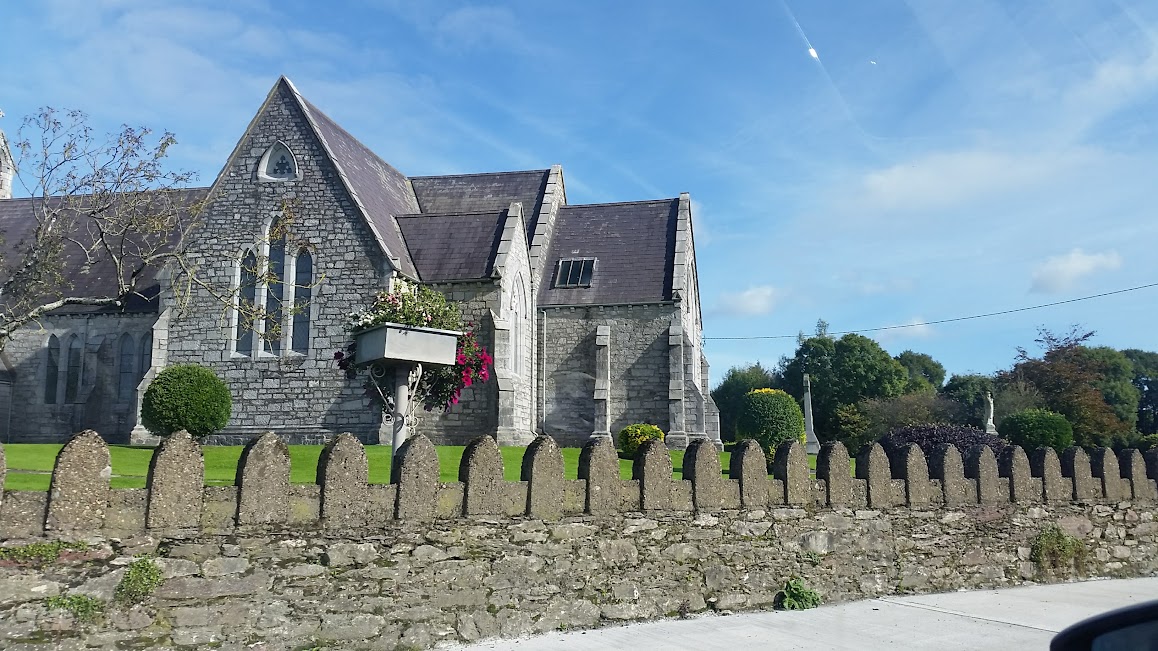
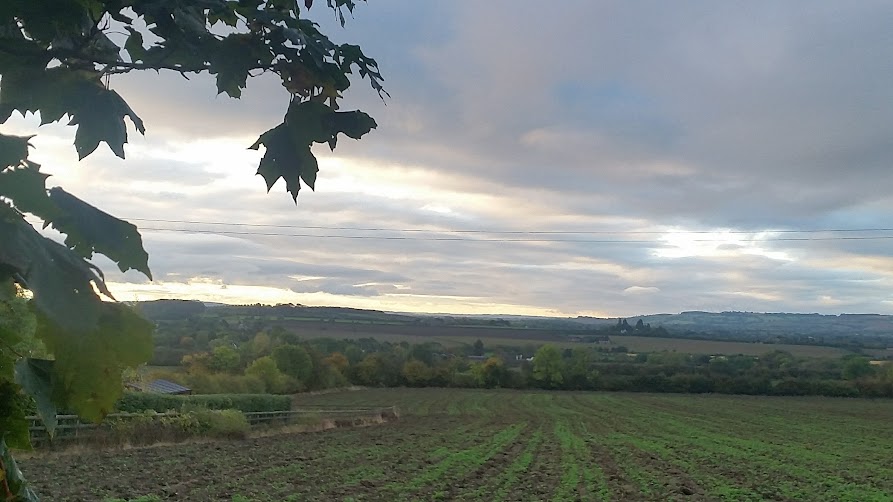
Beautiful Irish countryside.

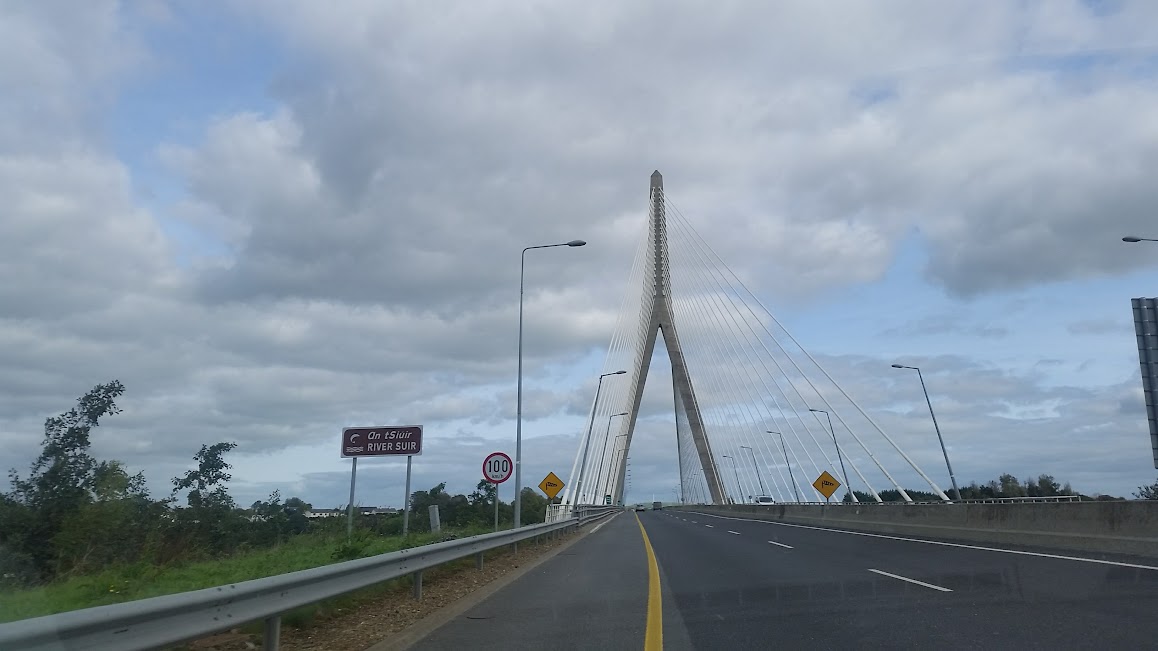
A decidedly modern bridge entering the oldest town in Ireland.


Reginald’s Tower, the oldest building in Waterford, the oldest city in Ireland established by Vikings in 914 A.D.


The ruins of an old Norman (French) church.
A ship similar to those of Waterford’s original settlers.
Oops – Viking selfie moment missed.


Entering Waterford, we found the downtown business district including Waterford Crystal Corporate headquarters and showrooms. Waterford is a name synonymous around the world with stunning Irish lead crystal. Newell’s mother had given us a very generous gift to help us “enjoy our trip to Europe” and he wanted to thank her by bringing back something he knew she would enjoy. He found a sparkling crystal pendant to hang in her window to release a prism of colors in the Florida sunshine.
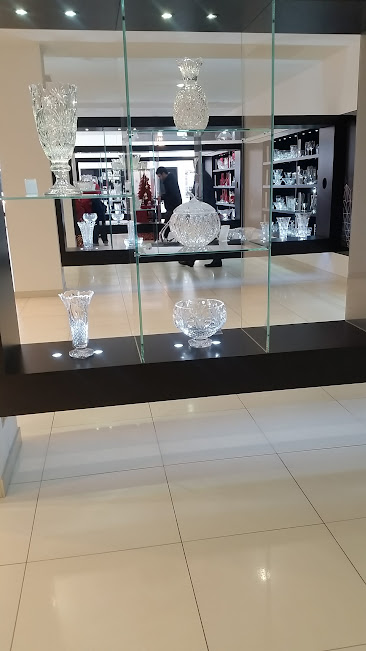
I looked at the gorgeous  (expensive) crystal pieces and wanted an ornament for our Christmas tree. I found a seahorse that I loved but discovered that it had been made in Slovakia or Slovenia; not the authenticity I was looking for. I found an embroidered shamrock at another shop instead.
 

After visiting several gift shops we finally located a little a red-headed, blue-eyed Irish lass to bring home to Ellyza, whom I think named her Bridget or Molly. And we found lunch at an Irish pub, oh my. Tim had a seafood pie with a mashed potato crust and a creamy seafood-filled sauce with crumb topping. Newell had Guinness stew and I enjoyed a wrap with authentic Irish (French fries) chips and malt vinegar. Ahhhh.

Next stop Kilkenny, one of Newell’s family heritage locations.

Newell and Tim opted to visit the castle of Kilkenny, but because of the climb in Blarney Castle the previous day, my foot was aching so I decided to explore the main block downtown. In a Dunnes store (much like a fancy Target), I found  a few Halloween decorations (how did it become such a big holiday in America and was just reawakening in the country of its origin?) Also some cosmetics and food for dinner; salads, yogurt, bread, toffee pudding and some soup we hoped to heat at the place we were staying. . It was lucky for me that I stayed behind, I avoided becoming one of the captives of Castle Kilkenny.
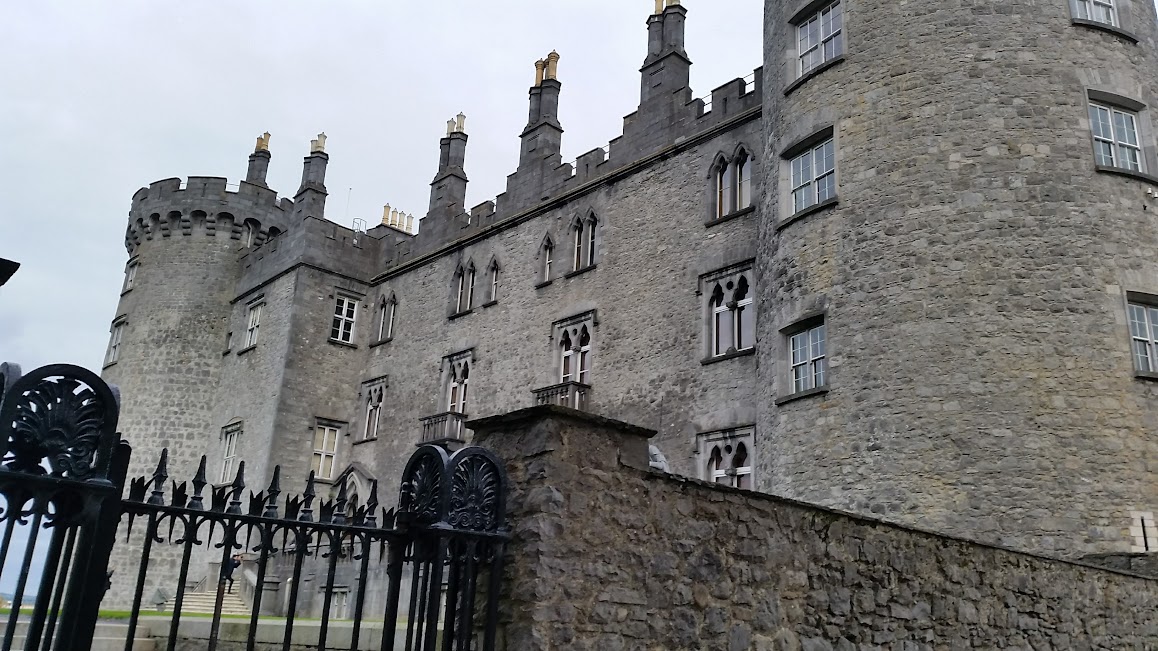

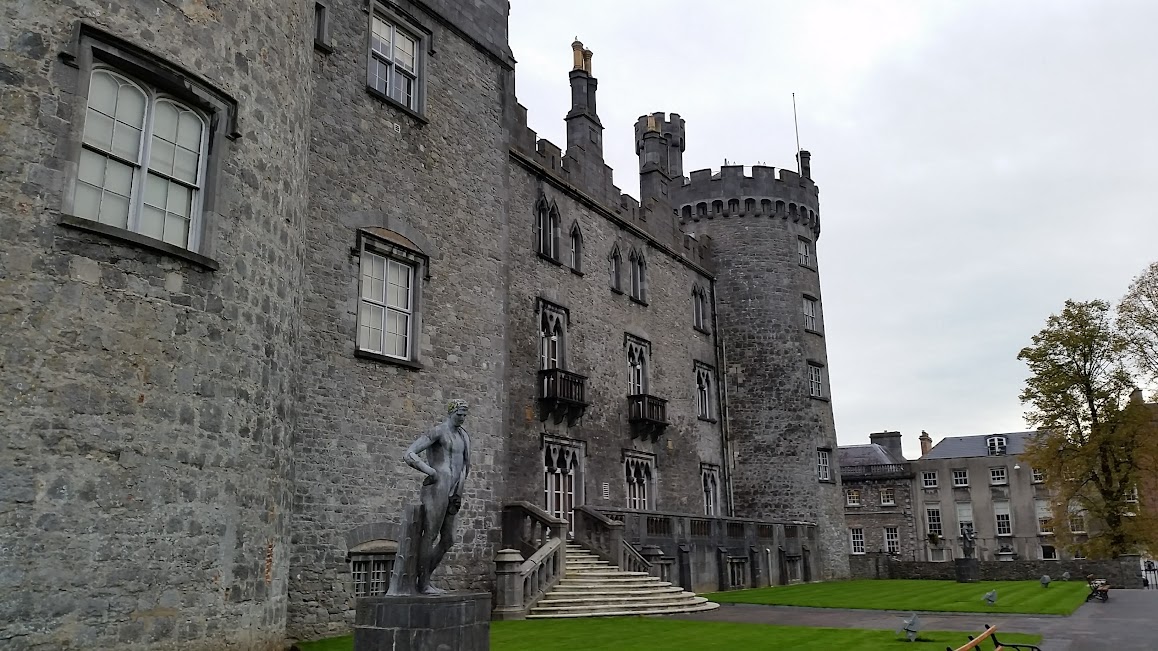
The formidable Castle Kilkenny, photos by Tim McMurtry

CAPTIVES OF CASTLE KILLKENNY by Newell McMurtry

“After having a great time in Waterford and heading towards Dublin we saw a sign indicating Killkenny was not far away.  Having ancestors from County Killkenny and it wasn’t dark yet, we decided to go.

The town center was old, medieval with very narrow streets. Driving is difficult on the opposite side of the street than what you’re used to.  Add in the narrow streets with cars parked on both sides with barely enough space for one car to get through (yet it’s a two lane road.)  I didn’t get to see much, because I was so focused on driving.  When we found a place to park by a large department store I was ready to get out an explore.

Pam’s foot still hurt so she didn’t want to explore, but Tim and I wandered around city center heading towards the castle.  There were neat old churches, cobblestone streets, narrow alleyways you could only walk through and lots of people with interesting accents.

We got to the castle and checked, but we were too late to take a tour.  It was an interesting castle surrounded by a 12 foot stone wall and a very large lawn that lots of people were playing on or walking their dogs or just strolling around.  Here is what it looked like from the castle.  Notice all the people walking around and there are even more in the distance.  I thought it would be cool to take a picture from the hill you see it the distance.
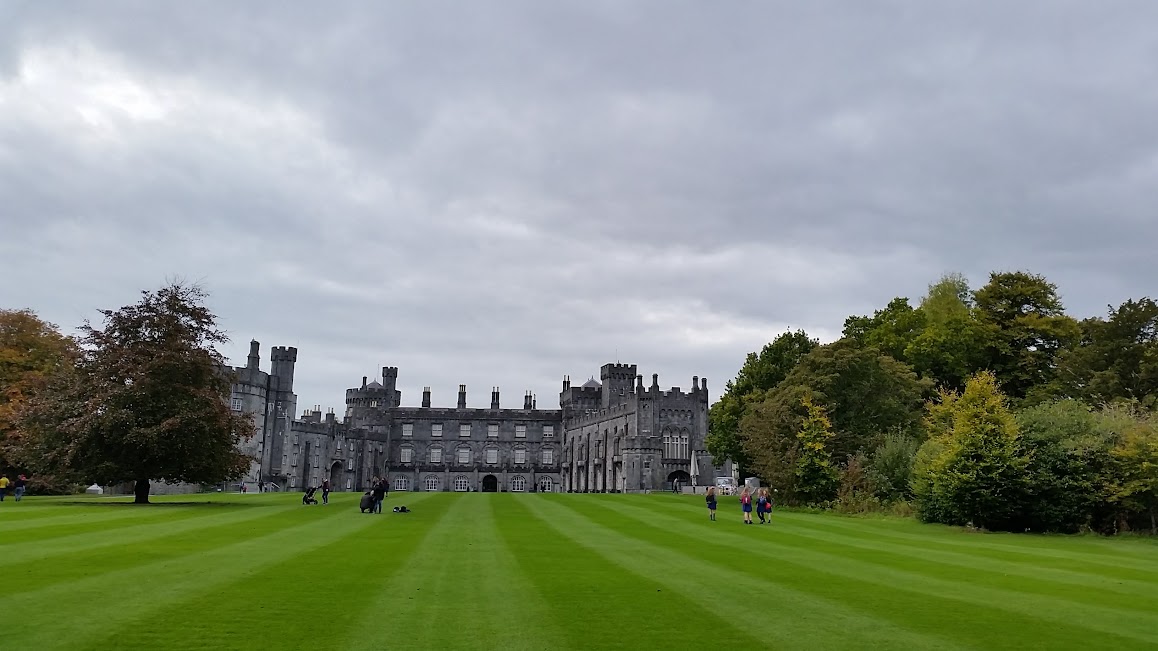
We got there and took a picture as most of the people were clearing out.  There was this one man in the yard…” here the story stops, I will add the basics and hope Newell will finish his narrative later.

Tim shares that they were about here when they heard a bell ring. Not knowing what it was for, they started for the castle to find out.

When they arrived, to their chagrin, they discovered that the bell signaled that the castle was closing and they were locked in! The beautiful 12 foot stone walls defied their attempts to exit. Finally they found a tree that they could climb up, then get on the wall and jump off the other side. Imagine their astonishment when they discovered they were in a private yard, also with a locked gate! Somehow they figured out an escape route and got out. And there I was blithely shopping and wondering what had taken them so long.
Climbing over the wall here to exit the castle was not a viable option.
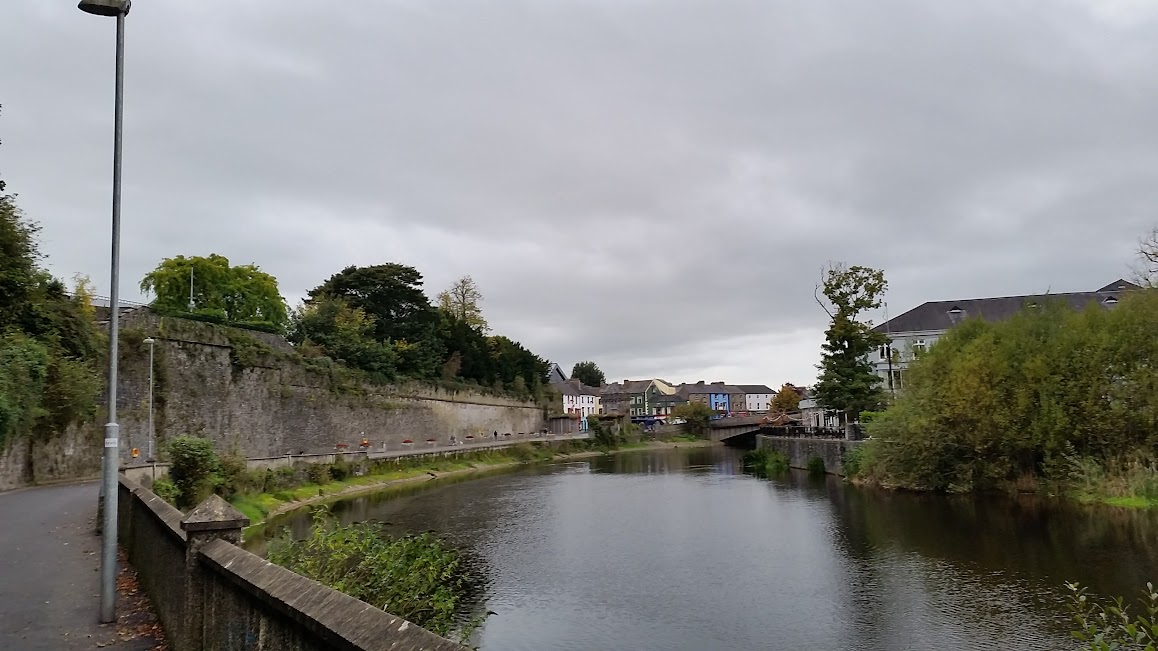
The escapees found this route back to town.

The only really bad experience we had with lodging was to present itself in Dublin.

I had reserved a suite through Orbitz in the city (the neighborhood photo should have been a warning.) I thought we could cook our dinner and the guys could go explore while I did laundry. When we arrived, there was no one to let us in. After several hours of calling Orbitz and talking to customer service reps in the Middle East (who kept hanging up on us)  someone found us a room at a different hotel.

Props to the gas station manager who let us stay in his market to use wifi calling long after closing time while we frantically searched for a place to stay that night. His Irish hospitality and generosity were much-appreciated; he wouldn’t lock up and go home until he knew we had a place to stay. He and his friends even called around to see if there were any vacancies nearby. We finally arrived at the hotel at 1 in the morning, there was no way to heat up the dinner we had bought for the night; we had to throw it away. We were tired hungry, hangry and ready for the few hours of sleep we could catch before we had to return the rental car and fly to Paris.

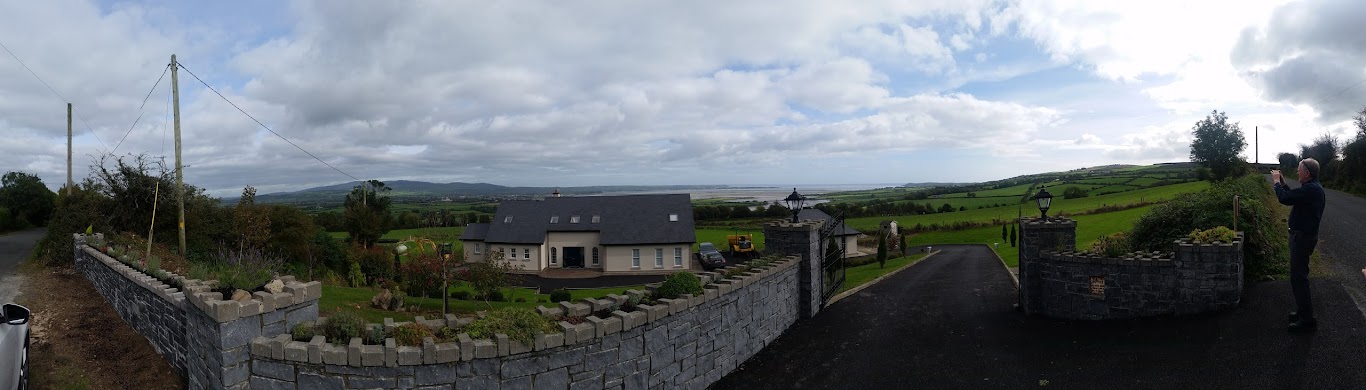
 

Erin go braugh!

Enjoy a conversation about all things Irish today on BYU Sirius Radio XM 143 at 3 p.m. Eastern or listen here: http://www.byuradio.org/listen
We loved Ireland. Loved. Ireland. Our trip to the Emerald Isle was nearly a spontaneous afterthought. As we were planning our travel agenda, Tim mentioned that he would really like to visit Ireland. It was not on the mainland of Great Britain and not on the way to France but because every year we do a St. Patrick’s Day feast and it was in Tim’s heart, we decided to drop in. We were glad we did.
Leprechaun Garden Centerpiece and Crudites
Our St. Patrick’s Day recipes in the Deseret News and other media sites

We left the Airbnb at 5 a.m. to catch the flight from Edinburgh on Ryan Air (we were informed later that we were lucky the flight wasn’t cancelled, not an unusual occurrence.  I had never experienced anything like that flight. Unlike larger airlines, you had to purchase any drinks or snacks you wanted. and the flight attendants were hawking lottery tickets. The bright colors and atmosphere were more like a carnival than the business-like airlines we were accustomed to. It was a fun introduction to the light-hearted ambience that permeates the island.

Since arriving in Europe, we had utilized public transportation, but in order to reach the Blarney Castle in the brief time allotted for the visit, we rented our first car. We had become accustomed to traveling on the left side of the road, or so we thought, until we actually were driving on the left. And for the first time, the road signs were not in English (all right they had translations but the first language was Irish.) I believe we had shaken off jet lag and Newell was awake enough to tackle this but it was not easy. We drove out of the airport in Dublin and fortunately were able to follow other cars onto the freeway we needed to reach Cork. We had GPS but it was helpful to carry maps we had picked up at AAA. A visual of distance and city placements was very helpful.

Yep, that’s us on the left side of the road, not too bad until you get to the freeways and roundabouts, then its a little creepy.
In Ireland the first stop was for lunch. We got off the freeway in Kildare and found what appeared to be an upscale outlet mall with a grocery store/bistro nearby. I could have lingered for quite a while if there had been more time, it had a charming Cape Cod-type of architecture and looked promising but Blarney awaited. Unlike the U.S. with our late hours and perpetually-open businesses, it seemed like the UK shuts down precisely at 5 or 6 p.m, which is one reason dinner in pubs becomes an attraction, sometimes the only option for prepared meals at off-hours.
We checked out the bistro and opted for a trip to the market instead. We needed to stock up on a few things and didn’t want to take the time for a sit-down meal. The Irish market was adorable. We found prepared sandwiches and a lunch deal that included a fruit smoothie and bag of vegetables or fruit; we added some fancy cheese straws, bell peppers and a few local treats. The cashier was friendly and patient with our awkward attempts to transition to Euros.
Back on the left side of the road, we were off to the Blarney Castle for a quick kiss…
The Blarney Castle has a large verdant estate
First view of the castle

Someone knitted or crocheted sweaters for the trees (what no Irish cable stitch?)
The Blarney Castle, Ireland

The old stone castle was large and imposing. Climbing the narrow winding stairways inside to reach the storied stone was a challenge. I wondered how the female inhabitants of the castle carried food and other supplies up the stairs while wearing long skirts. Eventually a later family built a more accessible castle on the property.


Tim acquires the gift of blarney.

The view from the top. Note that these are not tiny cows.


After CAREFULLY climbing back down the stairs we explored the poison garden and estate surrounding the castle.

Image may contain: plant and outdoor

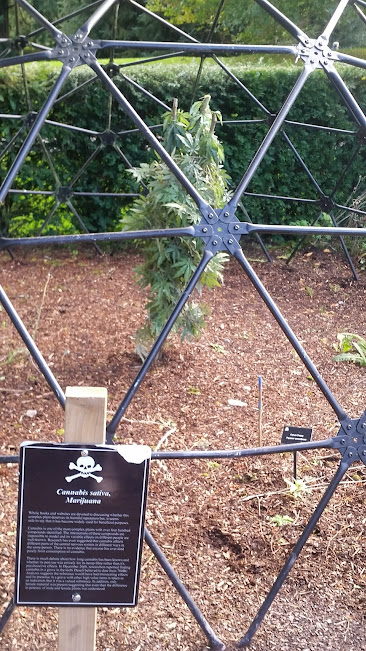
Apparently it was a thing in the past to have a few plants around that could do some damage – digitalis, ricin, opioids and others.


After capturing 2 leprechauns for my little granddaughters , we drove into Cork.

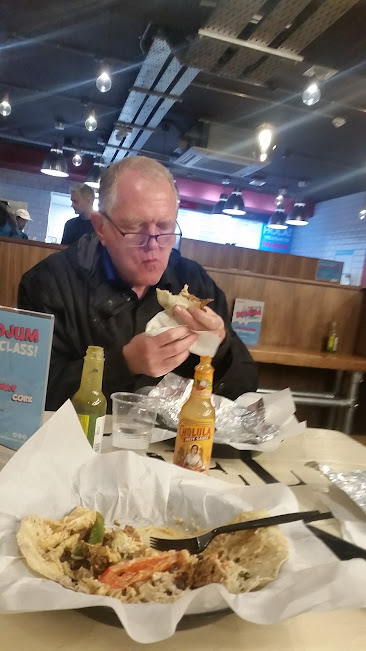
Newell enjoying an Irish burrito; not quite what we are used to, but still yummy.

Cork was charming, seaside and windy. 2 weeks after we were there, Hurricane Ophelia blew through, rerouting our trip home. We stayed at an airbnb home at Model Farm that was so beautiful, more elegant than many nice hotels we’ve been in. After a good night’s sleep, we will head into Waterford, the oldest city in Ireland originally settled by Vikings.

Endnote:

if renting a car abroad, always get the GPS option unless you have internet on your phone with no roaming charges. From roads to gas stations, stores and destination addresses a GPS is invaluable. Also we found the smaller the car the better in Ireland, France and Germany where the roads were often very narrow – I mean NARROW. Like squeezing down a lane with stone walls, we were knocking the ivy off the stones, but fortunately not the paint or rear view mirrors.

Decide how to approach dining ahead of time. If, like us you are short of time and trying to economize, you may want to pack an insulated bag and a few reusable ice packs. We had a large gray insulated zippered tote from Costco that proved invaluable for not only keeping food cold but it also doubled as a carry on tote for flights. We were able to stash a large quantity of stuff, my purse, a small backpack, jackets, magazines, etc. Some airlines only allow one carry-on and a purse or backpack, this stretched it. Also when driving and toting our stuff from one airbnb to another, it was convenient for corralling the food.

Secrets of Edinburgh; Hello Dolly!

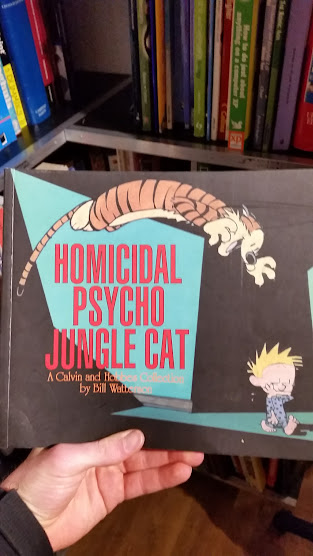
Our trip downtown yielded more fun surprises. Newell hoping to add to his tartan tie collection wanted to stop at a Scottish thrift store; we found one on our way to the museum. There were no tartan ties but we did run across several Calvin and Hobbs comic books and 2 sets of tartan-themed Christmas cards with trees and shaggy Scottish cattle. Since the McMurtrys raised cattle, he thought that would be fun for his family. We walked on to the National Museum of Scotland.
One of the things we loved about Europe was the frequency we experienced of walking through a neighborhood or museum and stumbling across something really cool from history. It happened again when we came face-to-face with a taxidermied sheep in a plexiglass case.
Hello Dolly! This was the first living creature cloned from a pre-existing parent using DNA. When she was “born” she was already 6 years old.

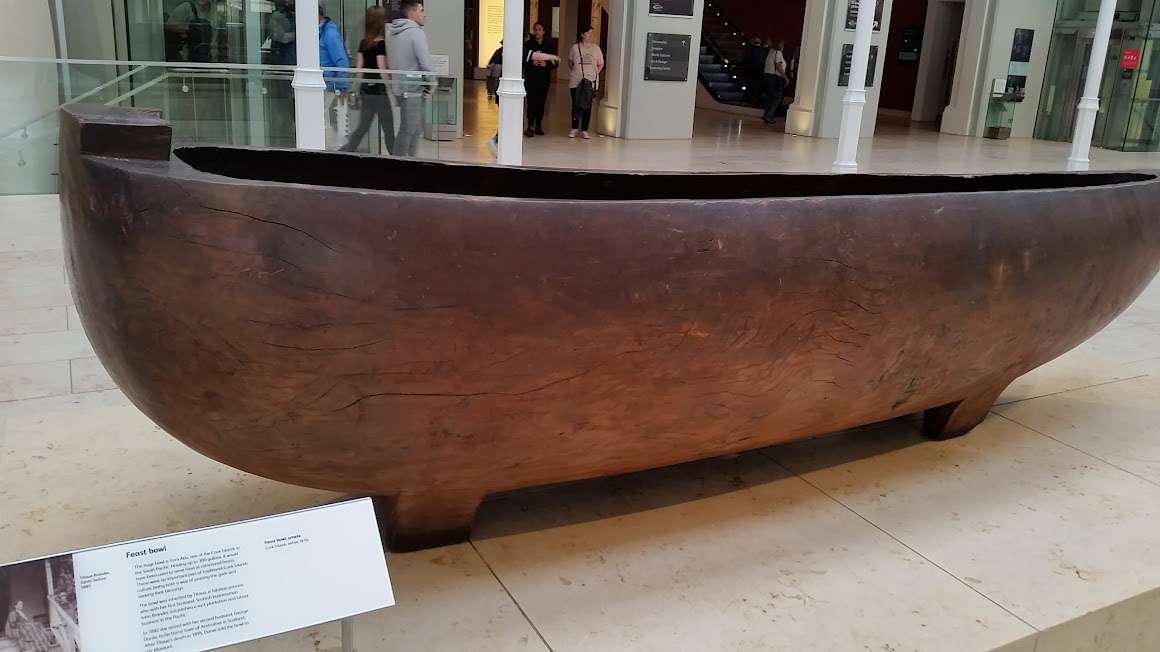
A “peace bowl” for the king and his company to share a drink from.

Fascinating exhibit cases for ancient pieces of jewelry and other small items.

Early art of the Picts and Scots. The Picts made more art, tattooed themselves and were more into mark-making as historical reference.

A crest of the United Kingdom.

Replica of the tomb of Mary Queen of Scots; she was interred at Westminster Abbey after being executed in the Tower of London for treason.

After lunch in a tartan plaid-upholstered cafe we made it through the rain to the Museum of Art.

William McTaggart, Spring

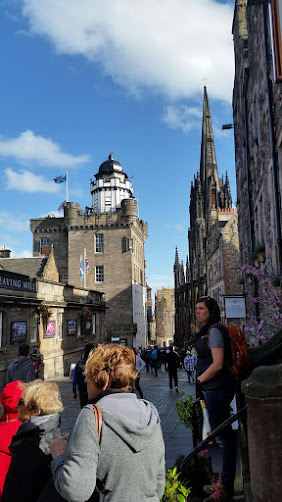
Die-hard Harry Potter fans will recognize this coffee house as the location author J.K. Rowling penned her famous Harry Potter and the Sorcerer’s Stone, the book that launched the series.

The Sir Walter Scott Memorial Tower downtown that the guys decided to explore. With my foot still healing I decided to pass and headed over to exploreTKMaxx  instead.

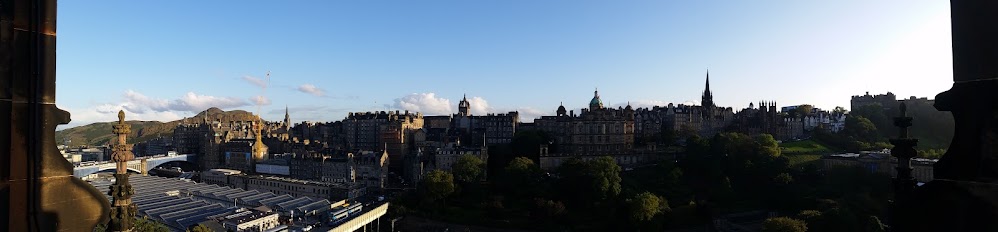
But oh that view…

The following day we moved to a different Airbnb and watched LDS General Conference. Our hosts suggested we walk along the Waters of Leith trail and visit the Gallery of Modern Art.

And this is the capitol city – gorgeous. On to the Scottish National Gallery of Modern Art.

One of my favorite exhibits – an artist bequeathed his entire studio to the museum where it was reconstructed and displayed it au natural.

And my family complains about my stacks of stuff.

With this we leave the art and culture of Scotland and prepare to discover Ireland.


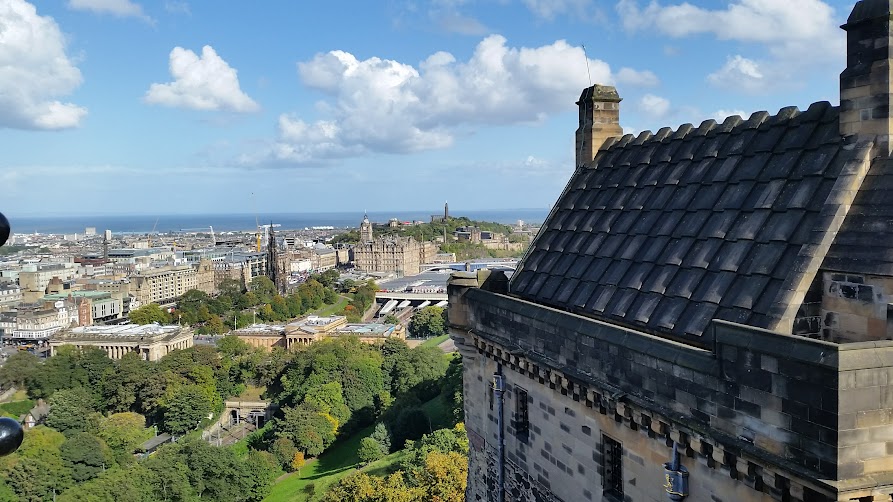
Inside Edinburgh Castle; discovering Scotland’s past

Inside Edinburgh castle are well-designed exhibits showing the history of the monarchy and nation. The coronation of Robert the Bruce in 1306 and  a timeline showing the kings of the Scots and national military history are prominently displayed.

A timeline chronicling Scotland’s kings from ancient times.

Bagpipers provided passion and inspiration for the warriors preparing for battle.

Warriors did not always wear kilts, sometimes plaid slacks.

  
A flag from 1800


I could not get enough plaid.

The Honours of Scotland
http://www.rampantscotland.com/know/blknow_honours.htm

As evening falls, the castle is awash in red spotlights causing an eerie glow. And we are off in search of haggis. A pub just off the Royal Mile had authentic Scottish haggis served with neeps and tatties. I had decided to forgo this local dish but it was served so beautifully, I gave in and tried it. Cooked in a baking dish like a small souffle and topped in mashes potatoes, I was pleasantly surprised.


Edinburgh and the Royal Mile; Days 7 – 10

As one enters the castle they are greeted by a statue of King Robert the Bruce
And the metal-studded portcullis gate
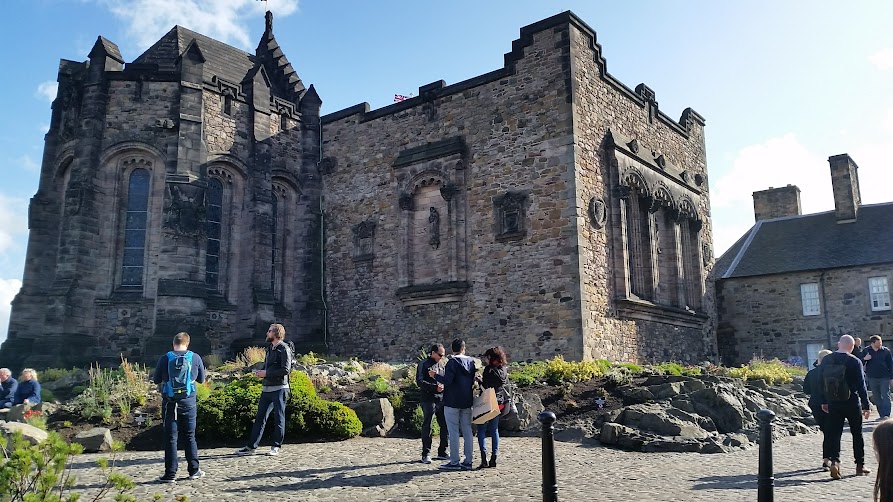
The climb doesn’t end at the entrance, inside are multiple buildings and defenses on the steep slope.
The complex is rich with history; from a Christian chapel to military museums, the story of Scotland has been well-preserved.
St. Margaret’s Chapel is the oldest building in Edinburgh, its a tiny but precious link to past Christianity and the heart of this massive military complex.
  
I’ll take a breather here and we’ll head indoors to explore the museums in the next post.

Day 6: A visit to Peter Rabbit and Beatrix Potter’s Lake District


On the way to the Lake District by train
From my childhood I have had a fascination with the stories of Peter Rabbit by artist and author Beatrix Potter. As an adult I realize how difficult it must have been for her to overcome the social mores of Victorian England to create and publish the best-selling children’s  books of all time.

Image result for peter rabbit

I felt it was important to go to the area that inspired and nurtured her creative genius: the Lake District in Northwestern England. The Peter Rabbit tales seem so quintessentially English – gardens, traditions, friendships, mischievousness and redemption. When I saw the movie based on her life I  felt I had found my calling – art and storytelling.

Image result for miss potter


https://www.youtube.com/watch?v=PqF25DJk-fo

The charming villages of Windermere and Bowness  with their rock walls and abundant foliage look like pages out of a Beatrix Potter storybook, or should I say, the storybooks look like they were inspired by the adorable villages?

Fern growing out of the crevices of a rock wall


Her lifelong love of nature and the beauty of the Lake District started when Potter was a child vacationing during summers with her family in this “fashionable” part of the country. Like the Potters, we took the train to Windermere then traveled to Bowness.

Beatrix Potter ‘s farm was across the lake.

She began her stories while writing letters to her favorite nanny’s children. Her books and illustrations became wildly popular.

As you can imagine there are a number of stores that sell Peter Rabbit merchandise. I believe Santa will be bringing me a Peter Rabbit calendar and tin filled with colored pencils.


We had the most charming picnic of local cheeses, breads, fruit and greens imaginable at, of all places, the train station. There’s a little grocery store/cafe called Booths that sells locally produced artisan foods. If heaven has a market, I hope it looks like this one. Imagine radish sprouts grown in sawdust and placed in folded paper cartons. I loved how everything was so handmade.

Image result for booths market at windermere

Image result for booths market at windermere

Related image

American stores often try to recreate the charm of a village market, but this was the real deal. It seems that Euro markets are more concerned with quality than quantity and the ingredients and products they make are, well, inspirational. Take note American retailers.

Image result for windermere train station

Re-energized, it was time to catch the evening train to Edinburgh.

END NOTE

There is a severe shortage of drinking fountains in Europe – imagine Tim’s delight when he found these in a market! Be sure to carry water or be on the lookout for water to purchase.


9/27 – Day 5: An homage to England’s great writers; by train to Oxford and Stratford-upon-Avon, Shakespeare’s birthplace


As much as we enjoyed exploring London, it was time to move on to visit the homes of 2 favorite literary superstars; William Shakespeare and Beatrix Potter (author and illustrator of Peter Rabbit) with a stop at Oxford University.

Oxford is conveniently located about halfway between London and Stratford; we chose to take the train. And here I err, Oxford was the home of 2 more of our favorite literary superstars: C.S. Lewis (Christian apologist and author of The Chronicles of Narnia) and and J.R.R. Tolkein (The Hobbit and Lord of the Rings trilogy.) Both men were professors at Oxford; friends and rivals. Because of Tolkein’s influence, Lewis converted to Christianity; Anglican, not Catholicism, disappointing Tolkein. Here is a wonderful blog post by Ethan Gilsdorf that shares more depth and information  about their relationship and experiences:  http://www.literarytraveler.com/articles/tolkien_lewis_england/

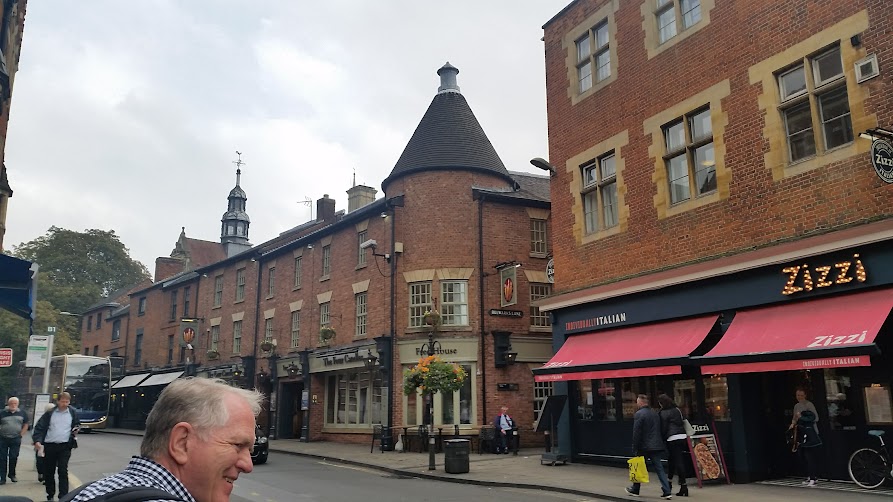
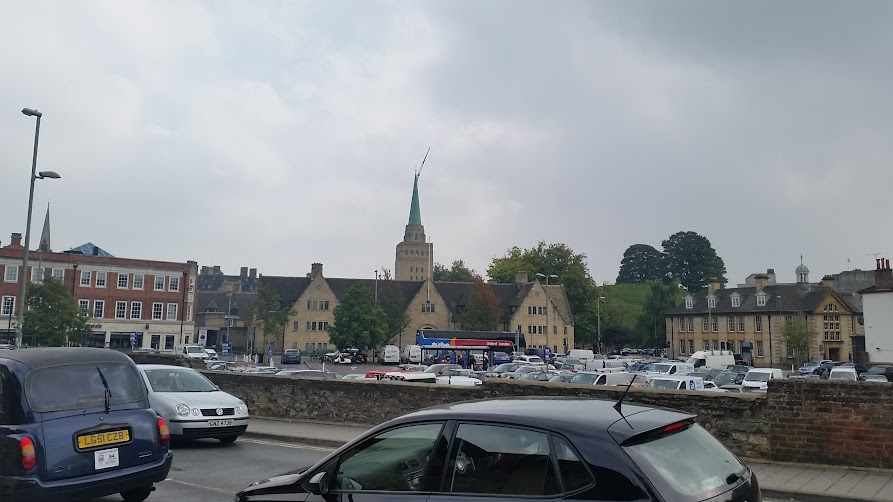
We saw enough of the town and campus to get a taste of the local flavor.


Oxford is, not surprisingly, a college town. Despite its illustrious reputation and history, it is a very-daily sort of place with lots of bicycles, fast food and college gear shops.

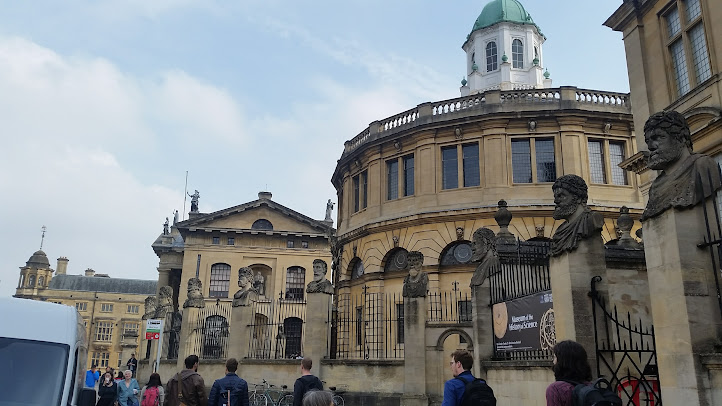
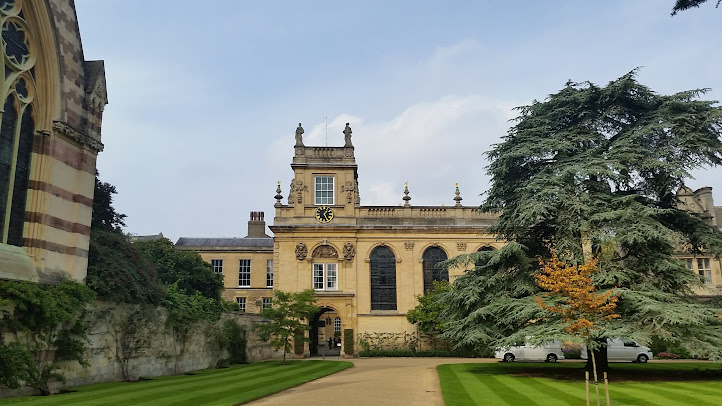
Oxford University is made up of a town-wide collection of colleges, unlike most U.S. universities that have large sprawling campuses.
The College of Sciences
The College of Divinity
After visiting an art and craft store to pick up needle and thread for a wardrobe repair and a tiny wooden stamp for baked goodie labels, we dashed back to the train heading for Stratford-upon-Avon.
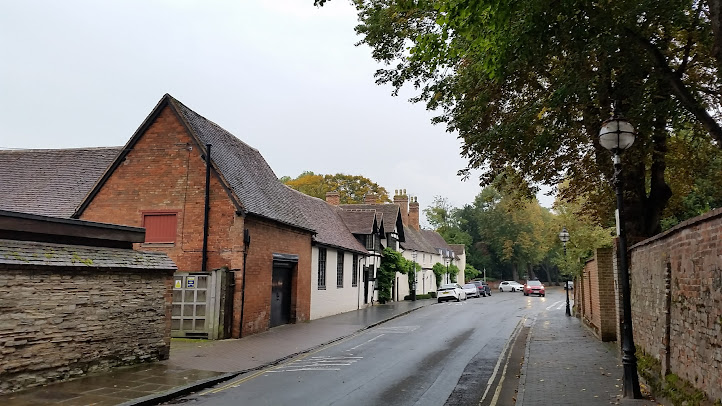
It was raining when we arrived; it looked like the Tudor-era town we were expecting to see. Except for paved streets, I imagine this is not too different from the neighborhoods young William Shakespeare passed on his way to school around 1575.
Hall’s Croft – the cottage where daughter Susanna Shakespeare and husband Dr. John Hall lived

After walking about a mile through the rain to get to our Airbnb, we found out that a roof problem would force us to go to another location (we had to pay the taxi) which turned out ok. We were housed in an old (really old) inn that served the traditional English breakfast we were looking forward to.

 The animated owner Pascal, showed us the map and marked the most popular tourist sites. He recommended a couple of pubs that served dinner and we took off to find the Holy Trinity Church were Shakespeare was baptized and buried.
The Holy Trinity Church at Stratford-upon-Avon

I love old places, including houses, castles, churches and graveyards. The oldest English graveyard in America that I’ve seen was in Jamestown ca. early 1600s. Here was a church built in the 1200s with tombstones so old the names and dates were worn away.

Holy Trinity Church at Stratford-upon-Avon

The land was granted for building a town of 20 families  in 714 A.D. by the Saxon king. About a century and a half later a church was erected by the river. The chapel has a long and tumultuous history, here is a chronology from the church’s website: http://www.stratford-upon-avon.org/history-overview

This was originally Roman Catholic but when King Henry VIII left the church and started the Anglican Church, all church properties in England were confiscated and given to the Church of England.

A tribute to William Shakespeare

The tomb of the Bard. His wife Anne is buried nearby, as is his daughter Susanna.

A side view of the Royal Shakespeare theater in Stratford where Shakespeare’s plays are performed.

The Royal Shakespeare Theater

In America we have food trucks, on the river in Stratford, food barges.

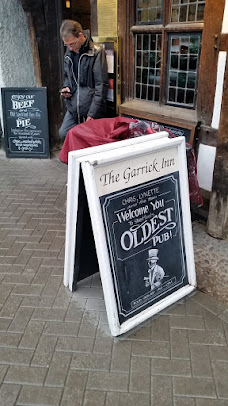
After a walking tour of the town, we found an old pub that claims to be the oldest building in town, The Garrick, open for dinner.  It is thought to have been built in 1596 with parts of the building dating back to the 1300s. In America this might have been the oldest English building in the country, but here, just another old pub.

I tried another round of fish and chips with a salad garnish and mushy peas ( the f&c in London were better), but the atmosphere of a really old building is quaint and a little eerie. An outbreak of the plague is said to have started here in 1564 with the death of Oliver Gunn. Supposedly haunted, we didn’t see any ghosts and we did wash our hands.


After a short walk we returned to the Bed and Breakfast, it was dark and eerie but still no ghosts. And when the sun rose we were treated to the classic traditional English breakfast in a communal dining room with tables set with real dishes and white linen tablecloths. 

Image result for english breakfast
English Breakfast: The Telegraph U.K.

Now we catch the train to take us to Peter Rabbit’s birthplace.

London Day 4: afternoon at the British Museum, evening at Piccadilly Circus

Richard the Lion-heart, king of England and Crusader whose statue stands outside of the British Parliament. Our ancestors were his cousins; we shared  the same grandfather, Henry 1 (Beauclerc).

British Parliament Building

After our exquisite tea at the Swan, we crossed the Thames, found Parliament, missed Westminster Abbey by one minute and headed up to the British Museum. I know that Great Britain colonized and “acquired” many treasures from around the world. I’m not going to open a discussion about the morality of these actions but will point out that the areas they were in prospered highly compared to the rest of the region; think Hong Cong, India, even the U.S.; another topic for another day.

The British Museum is a formidable structure housing many antiquities, including a few surprises we found inside. Walk with us and see history unfold through this amazing collection of artifacts.

Early Babylonian art; these statues are over 4,00 years old. Nimrod was a “mighty hunter” and great-grandson of Noah who decided that a very tall tower would be protective in case God once again decided to flood the earth. Apparently he was unaware that Noah had covenanted with the Lord who had promised not to send another great flood (2234 B.C.)  and set the rainbow in the sky as a symbol of the covenant.

According to scripture, it was during the construction of the Tower of Babel that God became angry because of the people’s rebelliousness and caused the “confusion of tongues” the multiplicity of languages we now have. Thanks Babylon.

Now comes the exhibit I have been waiting to see for years, the Elgin Marbles. Since I studied the history of design and interior design starting in 1983, I have been a fan of great art and architecture. Also known as the Parthenon Marbles, these sculptures were (legally) removed from the Parthenon in Greece and have been displayed in British Museum since 1817. Others are in the Louvre in Paris.

As we continued through the museum, I noticed a case containing a black stone. Sensing that it could be significant, closer inspection disclosed that it was THE ROSETTA STONE; the key to the unlocking of and the translation of ancient languages. The stone was discovered in Egypt in 1799 and has been displayed in the British Museum since 1802.
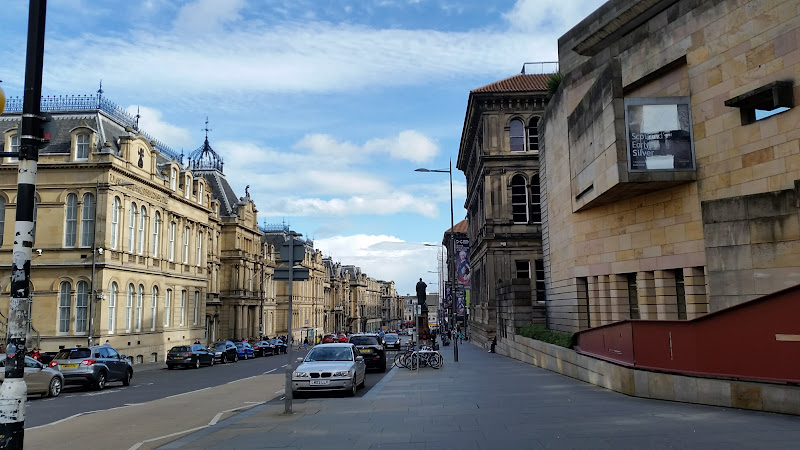
Other antiquities

The symbol of the bull was common in pagan cultures: from Encyclopedia Britannica, “According to myth, Mithra was born, bearing a torch and armed with a knife, beside a sacred stream and under a sacred tree, a child of the earth itself. He soon rode, and later killed, the life-giving cosmic bull, whose blood fertilizes all vegetation. Mithra’s slaying of the bull was a popular subject of Hellenic art and became the prototype for a bull-slaying ritual of fertility in the Mithraic cult.

As god of light, Mithra was associated with the Greek sun god, Helios, and the Roman Sol Invictus. He is often paired with Anahita, goddess of the fertilizing waters.” The cultures that worshipped a sun god would be called pagan or as described in scripture “the church of the devil.” Warfare, fertility rituals and human sacrifice were prominent in these cultures – think Aztecs, Mayans, Egyptians, Rome, Hinduism, etc.

The Brits are very punctual, the museum closed and it was everybody out! As we walked down the street we glanced up at this plaque on a nondescript building; the Caldecott Award is one of the highest honors in children’s literature. Ahh the creativity that is fostered by this intense amount of cultural enrichment.

We came across a treasure that is worth a stop if you are shopping in London. Liberty London is a five-story building filled with unique and wonderful shops with all kinds of fun souvenir possibilities.

This  window features a scene including Winnie-the-Pooh characters; a new movie to be released soon, Goodbye Christopher Robin, was heavily advertised in the train stations across London.

We headed downtown to see Trafalgar Square and have dinner at Piccadilly Circus. I’ll share a secret we learned; eat in pubs. The food is reasonably priced and very delicious. If you don’t drink, like we don’t, you’ll have to get used to the irritation and rudeness of the servers (I’m guessing their main profits come from the sale of alcohol) but for authentic local food, it can’t be matched.

Piccadilly Circus mural with 3-dimensional accents
Trafalgar Square

Goodbye London, I wish we had more time to discover your treasures, but we will return again.


Day 4: Shakespeare’s Globe, Tea at the Swan, the Tate Modern, the British Museum and Piccadilly Circus

The double-decker bus, another iconic London sight.

It was finally time to discover the (rebuilt) hangout of the Bard himself. William Shakespeare’s mother Mary was the sister of my 12th great-grandmother Margaret, we respectfully call him “Cousin Will.”

There are multiple bridges that will take you across the Thames to the South Bank, home of Globe Theater. Being Harry Potter fans, we opted for the Millennium Bridge that the Death Eaters destroyed in The Half Blood Prince. 

A tour at the Globe Theater shared information about the genius of Shakespeare, the crustiness of the gallery and that most of what the actors produced was improv. With only a very short time to practice, much of what occurred onstage was created as the play progressed. Performances were held in the afternoon due to the absence of artificial lighting. The poorer people paid one coin and were allowed to stand in the pit near the stage. Wealthier patrons had boxes or were seated above the stage with the musicians.

Rebuilding the modern Globe was a project initiated by American director Sam Wannamaker. The theater is so popular that when I tried to order tickets 2 months in advance, every show was sold out. But we drowned our sorrows in a delicious (herb) tea at the Swan Restaurant next door, more on that in a minute.

An exhibit of stage props at the Globe. I think the head on the shelf was Macbeth.


A model of the Globe Theater. Because the Puritans of England circa 1600 A.D. were influential and didn’t like theater, especially that young boys played the roles of women (theater was not considered an appropriate occupation for women),  it was outlawed in London. The venues were built across the river; it is ironic that both Queen Elizabeth and King James enjoyed the entertainment so much, they had Shakespeare’s troupe perform at their castles and friends’ manors.

The musicians were seated above the rear exit of the stage by the ladder. These were also high-priced seats for patrons that wanted to be seen by the crowds.

And now it was time for afternoon tea. The Swan restaurant is adjacent to the Globe. We were seated by a bank of windows that overlooked the Thames.

Anyone who knows Newell also knows that he is very careful with his money. I wanted to have an authentic English tea and talked him into taking us there for an early anniversary gift. The china and menu are decorated with characters from a Midsummer Night’s Dream.

The guys’ meals were served on wooden chopping blocks. Mine was on a tiered tray.


A link to the tea:  https://www.swanlondon.co.uk/afternoon-tea/

Did I mention clotted cream? Oh goodness, this is something we need in America. We all agreed that tea at the Swan was one of the most pleasant experiences we had in London, I highly recommend this restaurant. Be sure to make reservations in advance and request a table by the window.

A MIDSUMMER NIGHT’S DREAM AFTERNOON TEA

SAVOURY

Wild mushroom & leek quiche
Wiltshire ham, grain mustard, pea shoots
Oak smoked salmon, lemon pepper butter, dark rye
Clarence Court egg mayonnaise & watercress

SWEETS

Rose infused raspberry mousse & lemon cake
Elderflower & violet macaroons
Glazed white chocolate blondie, coco nibs
Blackberry compote & lavender cream
Mulberry scones & plain scones served with
clotted cream and seasonal berry jam

GENTLEMAN’S AFTERNOON TEA

Your choice of tea
4oz Shorthorn beef slider
Blue cheese & cider scones
Legbar Scotch egg
Fish finger sandwich
Croque Monsieur
Potted smoked salmon

We selected 2 herb teas: Citrus Chamomile and Lemon Verbena, they were served with rustic lumps of brown and white sugar. Not being a tea aficionado it was all so new, charming and delicious. After this feast we will need to do some serious walking, the Tate Modern and the British Museum are our next destinations.

That and a quick trip to the Globe gift shop to pick up some gifts for the grandchildren. Warning: You can spend a lot of time and money is this quirky establishment. We jokingly say that we dropped a lot of pounds in London (and didn’t lose any weight…)

*

*

*

From Macbeth who killed one of my ancestors, Duncan,  King of Scotland around 1000 A.D., not that I’m bitter at all…

The Tate Modern is adjacent to the Globe complex on Bankside south of the Thames.

Tate Modern, London.
Michael Duerinckx/Imagestate

Notice the Millennium Bridge, the Globe is to the left. As an artist I try to visit different styles and genres of art. Contemporary art is not my favorite, but I think it is important to see what is being made and discussed currently.

Picasso at the Tate

At the Tate there were “Black Power” exhibits; interestingly, one of the champions of the American Civil Rights movements was Dr. Martin Luther King Jr., named by his father for the great German Reformer Martin Luther. The 500th anniversary of Luther’s translation of the Bible into German and act of defiance against the Catholic Church in posting 95 thesis identifying areas of conflict with the scriptures would be commemorated in Germany in a few days.

Day 3: Innocence Abroad – September 24. Windsor Castle, an evening river cruise on the Thames and fish and chips for dinner

If it’s Monday, this must be Windsor. One of London’s underground trains delivers you right to Windsor, just blocks from the castle. Windsor is an upscale village with delightful shopping and dining (with resort prices).

Windsor Castle was started by William the Conqueror after he took the throne of England in 1066. This building is almost 1,000 years old and is the world’s oldest and largest working castle, it is one of the queen’s favorite residences today. Queen Victoria had a special train and car that transported her directly there, the train is on display.

Image result for windsor castle
Pronounce.London

On the days she is in residence, the royal apartments are closed to the public, we were lucky to visit when they were open. In the ticket office hangs a portrait of the Queen and her great-grandchildren.

The Norman Gate guards the west side.


This used to be a moat between the outer and inner walls of the castle.

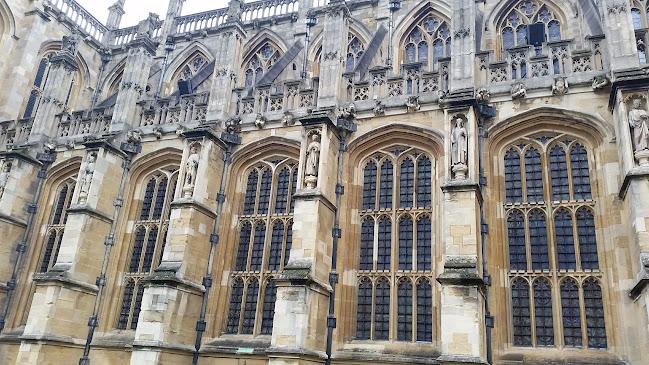
St. George’s Chapel named for the Patron Saint of England


There are really no words to describe the grandeur and history of the Windsor Castle.

This is a yard where jousting tournaments were probably held, now more likely to be used for polo games.

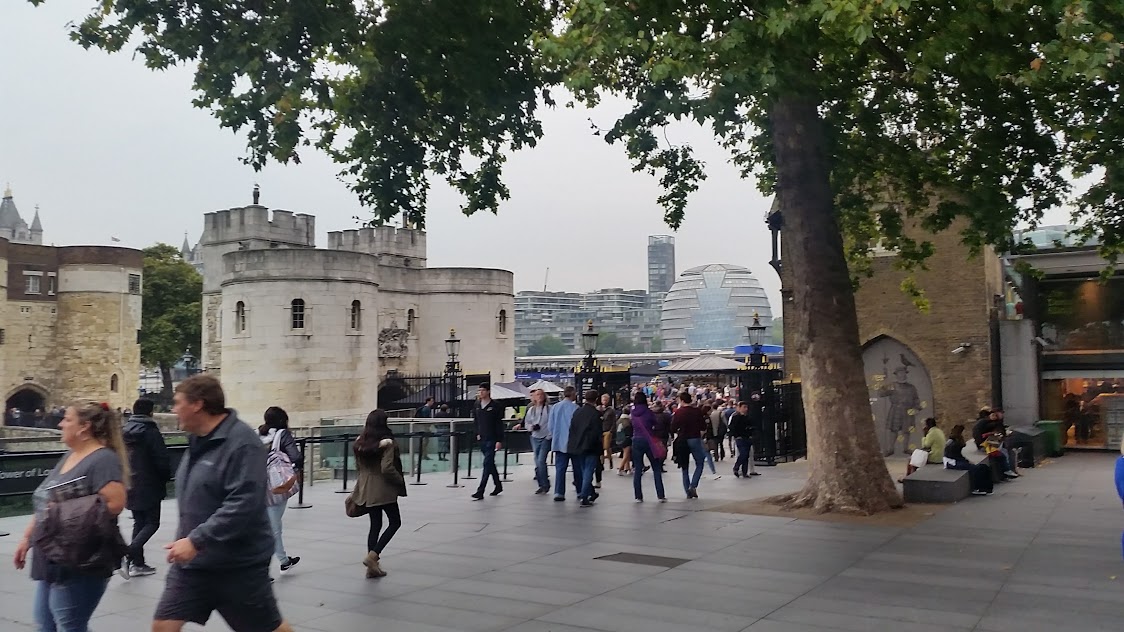
The Tower of London, built by William the Conqueror after 1066 A.D.

After a trip back into London we took a river tour of the Thames and sat down to a dinner of fish and chips.

The Thames River is muddy, very muddy. As an estuary the water comes in and out with the tides. Taking a river tour provides an opportunity to see the city from a very different perspective.

The iconic Tower Bridge is one of the most identifiable landmarks of London.

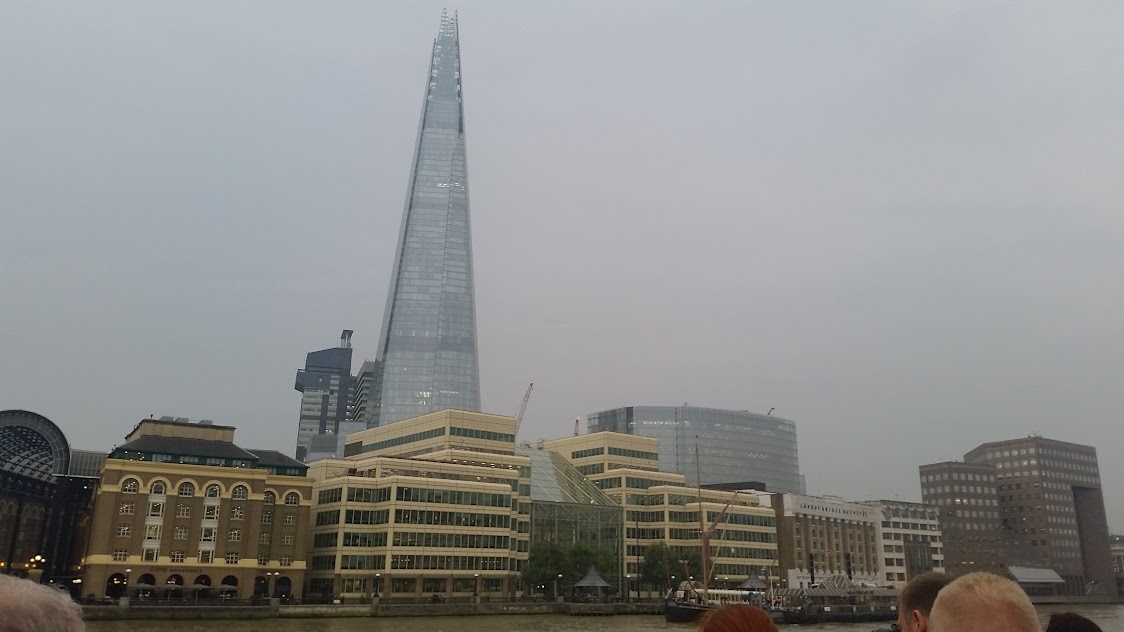
Newer buildings have changed the city’s skyline and are often nicknamed by residents; the “Shard”, the “Gherkin,” the “Walkie-talkie” and the “Cheese grater” are among others.

“The Shard”

Shakespeare’s Globe theater was rebuilt by American director Sam Wannamaker.


This Cleopatra’s Needle obelisk was a gift from Egypt for Britain’s help defeating Napoleon. It’s twin is in New York City.

The London Eye – we didn’t make it up there on this trip.

Big Ben stands as a silent sentinel during its renovation.

As evening falls London blazes with light.


After the cruise we were  off to find the fish and chips that Britain is known around the world for. We were not disappointed.

Image result for fish and chips
timeout.com

End Note:

Look up the top “traditional” foods of the region you will be visiting so you know what to eat like the locals. In England we were looking for fish and chips,  Spotted Dick, bangers and mash, roast beef and Yorkshire pudding, scones, an authentic British breakfast and toffee pudding. All amazing -all dispelled the fable of flavorless English foods.